Chatbots vs AI Agents: What Is the Difference?
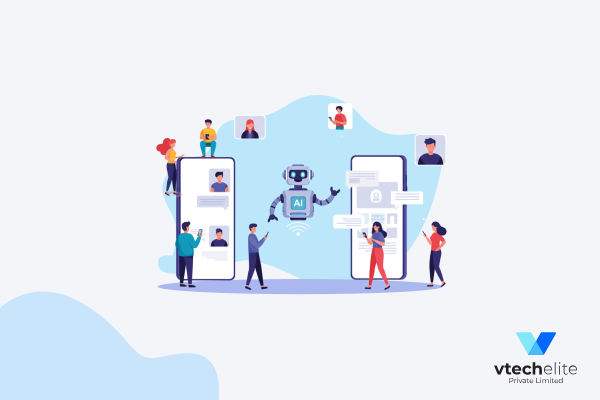



Chatbots vs AI Agents: What Is the Difference?
Understand the key differences between chatbots and AI agents, their use cases, and how to choose the right solution for your business needs.
Businesses are using conversational AI more than ever to make communication faster, easier and more efficient. Two of the most common AI tools are chatbots and AI agents. Both help businesses interact with customers but they work in different ways.
Chatbots are usually designed to answer simple questions or follow a set script like helping with FAQs or basic support. AI agents on the other hand are more advanced; they can understand context, make decisions and handle complex tasks automatically.
Because these tools are often mentioned together many people get confused about which one to use. Knowing the difference between chatbots vs AI agents helps businesses choose the right technology to improve customer experience, save time and streamline daily operations effectively.
For businesses looking to implement intelligent AI solutions, working with an experienced AI Agent Development Company can ensure that AI agents are customized and integrated to meet specific business needs.
In this guide, we’ll explain the main differences between chatbots vs AI agents and show real-world examples of how they are used. You’ll learn how AI agents vs chatbots work, what tasks they handle, and which solution is best for your business.
What is a Chatbot?
A chatbot is a computer program designed to talk with people just like a human would. Traditionally, chatbots followed simple rules or scripts to answer common questions or help with basic tasks, such as booking appointments or checking order status. Thanks to artificial intelligence (AI), many chatbots use natural language processing (NLP) and machine learning to understand context and give smarter, more personalized responses.
Businesses often use chatbots on websites, apps, and social media to provide instant help to customers. They are especially useful for answering frequent questions, guiding users, and handling simple tasks without needing a large customer support team.
Modern AI chatbots can even learn from conversations and improve over time, making interactions smoother and more efficient. Chatbots save time, improve customer experience and allow businesses to provide 24/7 support while handling many requests at once.
Key Features of Chatbots
- Predefined conversational flows or AI-powered responses
- 24/7 availability for customer support
- Task automation for routine inquiries
- Ability to collect user data and feedback
Use Cases of AI Chatbots
AI-powered chatbots have gone beyond simple FAQs. Modern chatbot agents leverage machine learning to understand context, improve over time, and handle a wider range of queries. Here are some prominent use cases:
Customer Support
- AI chatbots quickly answer common questions, helping customers without waiting. This reduces response times and allows human agents to focus on more complicated issues that need personal attention, making support faster and more efficient.
Lead Generation
- AI chatbots can talk to website visitors, collect their information, and figure out which ones are interested in your products or services. They then pass these potential customers, called leads, to the sales team. This helps businesses find and connect with interested customers faster and more efficiently without needing extra staff.
E-commerce Assistance
- AI chatbots help online shoppers find the right products, add items to their cart, and complete purchases. They can answer questions about products, check stock availability, and even guide users through payment steps. By providing instant support, chatbots make shopping faster, easier, and more convenient for customers.
Healthcare Support
- AI chatbots help patients by providing basic health information, checking symptoms, and guiding them on what steps to take next. They can also schedule appointments, send reminders, and educate patients about treatments or medications. This makes healthcare more accessible and saves time for both patients and medical staff.
Internal Business Operations
- AI chatbots can help employees by answering common HR questions, providing IT support, and guiding them to information in the company’s internal databases. Using AI Development Services makes it faster and easier for staff to find what they need, reduces the workload on support teams, and keeps day-to-day operations running smoothly.
Real-World Examples of AI Chatbots
Many companies use AI chatbots to make life easier for their customers. Here are a few examples:
Sephora
- Sephora’s chatbot helps customers easily find the products they need, book appointments at stores, and get personalized beauty advice. It acts like a friendly assistant, answering questions and giving recommendations, making shopping faster, more convenient and tailored to each user’s preferences.
Bank of America (Erica)
- Erica is Bank of America AI chatbot that helps customers with everyday banking tasks. It can answer questions, check account balances, help make transactions and even give financial advice. Erica makes banking faster and easier by providing support anytime, without visiting a branch.
Domino’s Pizza
- Their chatbot lets customers easily place pizza orders, check the status of their deliveries, and get updates on deals and promotions. It makes ordering faster and more convenient by allowing people to interact through a simple chat interface instead of calling or visiting the website.
What is an AI Agent?
An AI agent is a smart computer program that can perform tasks on its own and improve over time by learning from experiences. Regular chatbots follow fixed scripts or answer simple questions, but AI agents can understand context, make decisions and handle complex, multi-step tasks.
AI agents can connect with different systems, analyze large amounts of data, and even predict outcomes to help businesses make better decisions. For example, they can manage customer requests, automate workflows, provide personalized recommendations or assist in planning and strategy.
AI agents go beyond simple conversation. They act as autonomous digital helpers, making processes faster, smarter and more efficient for businesses of all sizes.
Key Features of AI Agents
- Contextual understanding and reasoning
- Autonomous decision-making and learning from interactions
- Integration with multiple business systems and APIs
- Handling complex, multi-step tasks
Use Cases of AI Agents
AI agents are smart systems that can do more than simple tasks; they can think, learn, and make decisions. Businesses often hire AI developers to implement these agents effectively for various applications. Here are some common ways they are used:
Virtual Personal Assistants
- AI agents like Siri or Google Assistant help you organize your daily life. They can set reminders, manage your calendar, send messages, make calls and answer questions. By handling routine tasks quickly and efficiently, these assistants save time and make it easier for users to stay organized and focused on what really matters.
Business Process Automation
- AI agents can automate routine business tasks to save time and reduce mistakes. For example, they can handle employee requests in HR, process invoices in finance, or track shipments in the supply chain. By managing these repetitive tasks, AI agents allow employees to focus on more important work, improving efficiency and productivity across the organization.
Predictive Analytics
- AI agents can study large amounts of data to find patterns and trends. This helps businesses make smarter decisions, like predicting future sales, understanding customer behavior, or spotting potential problems before they happen. By using these insights, companies can plan better, reduce risks, and improve overall performance.
Smart Recommendations
- Systems can suggest content, products, or services based on a user’s interests and behavior. For example, streaming platforms recommend movies you might like, online stores show products similar to what you’ve viewed, and apps provide personalized tips or offers. This makes it easier for users to find what they need and enjoy a more relevant experience.
Agentic AI Use Cases
- Agentic AI refers to autonomous AI agents that can work independently to perform complex tasks. Agentic AI Use Cases include customer service, where they handle queries automatically, research, where they analyze large datasets quickly and enterprise applications, where they manage workflows and processes. These AI agents save time, reduce errors, and improve overall efficiency.
Real-World Examples of AI Agents
Many companies and products use AI agents to make life easier and work smarter. Here are some examples:
Siri and Alexa
- Voice-controlled AI assistants that make life easier. They can set reminders, play music, answer questions, and control smart home devices like lights or thermostats, helping users complete everyday tasks quickly and conveniently.
IBM Watson Assistant
- This AI agent helps businesses provide personalized customer support. It can handle multiple steps in a conversation, answer questions, guide users through processes, and give useful insights to improve service and decision-making.
Tesla Autopilot
- This AI agent helps Tesla cars drive safely by automatically controlling steering, speed, and lane changes. It monitors traffic and obstacles, making driving easier and reducing the chances of accidents.
Key Differences Between Chatbots and AI Agents
Understanding the differences is crucial for businesses aiming to implement the right AI technology. Here’s a concise comparison:
| Feature | Chatbots | AI Agents |
|---|---|---|
| Intelligence Level | Rule-based or simple NLP | Self-learning, context-aware |
| Task Complexity | Handles simple, repetitive tasks | Handles complex, multi-step tasks |
| Autonomy | Limited; requires human input | Autonomous; can make decisions |
| Integration | Usually standalone | Connects with multiple systems |
| Learning Ability | Minimal or none | Improves over time through machine learning |
Chatbots vs AI agents differ in intelligence, autonomy and the complexity of tasks they can handle. This distinction is essential when deciding which solution best fits your business.
How to Choose Between a Chatbot and an AI Agent
Selecting the right AI tool depends on what you need your business to do. Here’s a simple way to decide:
Business Goals
- Decide what you need. If you want to handle basic tasks like answering questions, choose a chatbot. If you need a system that can make smart decisions and handle complex tasks, an AI agent is better.
Task Complexity
- Chatbots are best for simple, repetitive tasks like answering common questions. AI agents are better for complex tasks that involve multiple steps, decision-making, or analyzing information to provide smart, personalized solutions.
Budget
- Setting up an AI agent usually costs more than a chatbot because it is smarter and can handle complex tasks. Chatbots are cheaper and faster to set up, making them ideal for simple automation on a smaller budget.
User Experience Expectations
- If you want your customers to have more personalized help or handle complicated questions, an AI agent is better. Chatbots are fine for simple answers, but AI agents make interactions smarter and more natural.
Scalability
- Think about your business growing in the future. Choose a solution that can handle more users, add new features, and connect with other tools easily. AI agents are usually better for this than simple chatbots.
Conclusion
Both chatbots and AI agents are important tools for improving customer engagement, saving, time and automating business tasks. Chatbots are best for simple repetitive tasks like answering FAQs or guiding users through basic processes. AI agents are smarter; they can understand context, make decisions and handle more complex tasks.
Knowing the differences between chatbot vs AI agent and understanding your business needs will help you choose the right solution. Whether it is using chatbot agents for customer support or taking advantage of AI agent vs chatbot differences for advanced automation, partnering with AI Integration Services can ensure the right choice and make a big difference in efficiency and user satisfaction.
As AI grows the line between chatbots and AI agents may blur but the decision should always depend on task complexity, autonomy and integration needs.
Frequently Asked Questions (FAQ's)
You might also like
14 Of The Hottest Mobile Application Development Trends You Should Know This Year
Differences Between No-code, Low-code, and High-code Development

Top Ecommerce development trends to watch out for in 2023
What Our Customers Say About Us

