What Is Generative AI (GenAI)? How Does It Work?
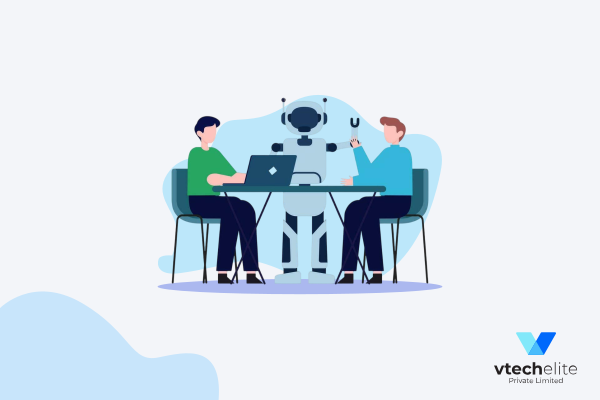



What Is Generative AI (GenAI)? How Does It Work?
Generative AI is a type of artificial intelligence that can create new content such as text, images, audio, video, and even code. Instead of only analyzing or sorting information, it learns patterns from large amounts of existing data and then uses that knowledge to produce original results.
This technology is powered by advanced machine learning models like transformers, GANs (Generative Adversarial Networks), and diffusion models, which help generate realistic and human-like outputs.
Businesses and individuals use generative AI platforms to save time, improve creativity, and automate tasks. It is widely used in marketing, content creation, customer support, design, education, and software development. Generative AI Development plays a key role in building advanced AI solutions that power these applications.
Overall, generative AI is transforming the way we work by making content creation faster, easier, and more efficient across different industries.
What Is Generative AI (GenAI)?
Generative AI refers to a type of artificial intelligence that can create new content by learning patterns from large amounts of data. When people ask what generative AI is, the simple answer is: it is AI that generates content instead of just analyzing it.
Unlike traditional AI, which is used for prediction or classification, generative AI produces original outputs that feel human-like. It can write articles, create images, compose music, and even generate computer code.
This idea of generative intelligence focuses on simulating human creativity by understanding context and structure in data. Modern tools like large language models and image generators are part of a generative AI platform used widely across industries.
How Does Generative AI Work?
Generative AI works by learning patterns from large amounts of data such as text, images, and audio. During training, it studies how information is structured and how different elements are related. When a user gives a prompt, the AI uses these learned patterns to predict and generate new content step by step.
The generative AI process follows a clear training and generation cycle:
- Data Collection: Large datasets like text, images, and audio are gathered.
- Model Training: AI models learn patterns, structures, and relationships within the data.
- Pattern Recognition: The system identifies how different pieces of information are connected.
- Content Generation: Based on user input (prompts), the model generates new and relevant outputs.
Instead, it predicts and creates new content based on what it has learned. For example, if you ask it to write a blog or create an image, it generates original output by understanding patterns and relationships in data.
Types of Generative AI Models
Generative AI includes several model types each designed for different tasks.
1. Text-Based Models (LLMs)
- These models are designed to understand and generate human-like text. They are used in tools like chatbots, writing assistants, and virtual helpers. They read your input, understand the meaning, and respond in a natural and useful way just like a human would.
- You type a question or instruction and the AI gives you a clear and helpful answer. These models are trained on large amounts of text data which helps them learn language patterns, grammar, and context to generate smart and meaningful responses quickly and effectively.
- This is made possible through advanced techniques in Machine Learning Development, where models learn from data and gradually improve their ability to understand and generate language.
2. Diffusion Models
- Diffusion models are widely used for creating high-quality images. They work by gradually transforming random noise into detailed visuals based on text prompts. In simple words, these models start with a completely unclear or “messy” image and slowly clean it step by step until a clear picture is formed.
- This process helps AI generate very realistic and highly detailed images. Each step improves the quality and structure of the image until it matches the given description. Diffusion models are widely used in modern AI art and design tools for producing creative and professional visuals.
3. GANs (Generative Adversarial Networks)
- GANs consist of two neural networks: a generator and a discriminator. They compete with each other, which helps the system improve over time. The generator creates fake data like images or videos, while the discriminator checks whether the content looks real or fake. This constant competition makes the results more and more realistic.
- GANs become very good at producing high-quality synthetic images, videos, and even deepfake content. They are widely used in gaming, animation, design, and media industries. GANs are powerful because they learn by improving through this back-and-forth learning process.
4. Image Generation Models
- These models are designed to create images from simple text descriptions or rough sketches. You just type what you want to see, and the AI turns your idea into a visual image. These models are widely used in graphic design, advertising, social media content, and digital art.
- They help creators save time and quickly produce high-quality visuals without needing advanced design skills. Today, they are an important part of modern generative AI tools and creative workflows.
5. Audio & Video Generation Models
- These models generate speech, music, and video content. They are increasingly used in entertainment, dubbing, and content production. In simple words, these AI models can create sounds and videos just by using text or instructions. For example, they can turn written scripts into spoken audio, create background music, or even produce full videos without a camera.
- They are widely used in movies, YouTube content, advertisements, and online learning materials. This technology saves time, reduces production costs, and helps creators make high-quality content faster and easier than traditional methods.
Key Features of Generative AI
Generative AI has some important features that make it very useful in real life. Here are the main ones explained in a simple way:
Human-like Content Creation
- Generative AI can create text, images, and other media that look very similar to human-made content. It understands patterns in data and uses them to produce natural and realistic results. This helps in writing, designing, and creating content quickly and easily.
Multi-format Output
- Generative AI can create different types of content in one system. It can write text, generate images, produce audio like voice or music, and even create videos. This makes it very useful because users can get all kinds of creative content from a single AI tool quickly and easily.
Prompt-based Interaction
- Users can give simple instructions called prompts to generative AI. The AI then creates the required output based on those instructions. You don’t need technical skills just type what you want like text images or ideas and the AI will quickly generate results for you in an easy way.
Continuous Learning Capability
- Generative AI keeps getting better over time. It learns from new data and feedback, which helps it improve its accuracy and quality. This means the more it is used and trained, the smarter and more helpful it becomes.
Benefits of Generative AI
Generative AI offers many practical advantages that make work easier, faster, and more efficient across different industries. Here are the key benefits explained in a simple way:
Increased Productivity
- Generative AI helps save time by doing repetitive and boring tasks automatically. Instead of spending hours on the same work, people can let AI handle it quickly.
- This allows them to focus more on important and creative tasks that need human thinking and decision-making. As a result, work becomes faster, easier, and more efficient in everyday use.
Creativity & Innovation Boost
- Generative AI helps improve creativity by giving fresh ideas, suggestions, and designs. It works like a creative assistant that supports you when you are stuck or need inspiration. Whether you are writing content, designing visuals, or planning a project, AI can show new possibilities and different approaches.
- This helps people think in smarter and more creative ways, making their work more innovative, faster, and more effective without much effort or time.
Cost Reduction
- Generative AI helps businesses save money by doing many tasks automatically. It can write content, answer customer questions, and process data without much human effort. Because of this, companies do not need large teams for simple or repeated work.
- AI handles these tasks quickly and efficiently, which reduces overall business costs and improves productivity.
Personalization at Scale
- Generative AI can create personalized experiences for a large number of users at the same time. It studies user behavior, interests, and preferences to deliver customized content. For example, different users may see different messages, product suggestions, or recommendations based on what they like.
- This helps businesses connect better with each customer in a more meaningful way. Instead of showing the same content to everyone, AI makes each experience unique and more relevant for every individual user.
Faster Content Creation
- Generative AI can quickly create content like articles, images, and videos within seconds. This saves a lot of time compared to traditional methods. It helps individuals and businesses complete their work faster and more efficiently.
- Many companies offering Generative AI Development services are helping businesses use this technology in their daily operations. This improves productivity, reduces effort, and enhances overall performance in a simple and effective way.
Popular Generative AI Tools
Many different tools use generative AI technology to make work easier and faster.
AI Chatbots
- AI chatbots are computer programs that can talk with people like humans. They help answer questions, solve problems, and support customers anytime. Businesses use them for customer service, virtual assistants, and automatic replies, making work faster and easier without needing a real person every time.
Image Generators
- Tools that create realistic or artistic images from text prompts. These AI tools convert written descriptions into visual images. They help users quickly generate creative visuals without manual designing.
- They are widely used in design, marketing, social media, and other creative industries to produce high-quality images in less time.
Writing Assistants
- AI Writing Tools help users generate blogs, emails, and marketing content. They make writing easier by giving suggestions, improving sentences, and saving time. These tools are very useful for creating clear and professional content quickly, even if you are not an expert writer.
Coding Tools
- Assist developers in writing, debugging, and optimizing code. These tools help find errors, improve code quality, and speed up development work. Businesses often rely on Hire AI Developers to build custom AI solutions tailored to their needs, making software development faster and more efficient.
Generative AI Use Cases
Generative AI is now used in many different industries. It helps people and businesses save time, work faster, and create better results.
1. Marketing & Content Creation :
Generative AI helps marketers quickly create blogs, ads, social media posts, and branding content. It improves efficiency by producing high-quality content in less time, ensuring consistency across all platforms while saving effort and boosting overall marketing productivity.
2. Customer Support :
AI chatbots quickly answer customer questions without delay. They are available 24/7, helping businesses provide faster and more efficient support. This improves customer experience, reduces waiting time, and increases overall customer satisfaction by handling common queries instantly and accurately.
3. Healthcare :
Generative AI in healthcare helps with medical imaging, drug discovery, and patient data analysis. It supports doctors by improving diagnosis and treatment decisions. It also enables agentic AI applications in healthcare, where intelligent systems can assist in monitoring patients, suggesting treatments, and improving clinical workflows for faster and more accurate care.
4. Education :
- AI is used to create personalized learning materials and smart tutoring systems. It adapts lessons based on each student’s needs, helping them learn at their own pace. This improves understanding, makes studying easier, and provides a more effective and engaging learning experience for students.
5. Entertainment :
- Generative AI is widely used in entertainment like video games, movies, and music creation. It helps creators easily design characters, scenes, and sound effects. Many companies using Data Science Solutions are integrating generative AI into their systems to improve efficiency, creativity, and overall production quality.
Challenges & Limitations of Generative AI
Even though generative AI is very powerful and useful, it still has some important limitations. Understanding these helps us use it more safely and effectively.
Accuracy Issues
- Generative AI does not always provide 100% correct answers. Sometimes it generates information that looks accurate but is actually wrong, incomplete, or outdated. Because of this limitation, human review and fact-checking are still very important to ensure the information is reliable, especially in critical or professional use cases.
Bias in AI Models
- AI systems learn from existing data. If the training data contains bias or unfair information, the AI can also repeat those same biases in its responses. This means outputs may become one-sided or unfair, so careful data selection and monitoring are important to reduce bias in generative AI systems.
Copyright & Legal Risks
- Generative AI may sometimes produce content that closely resembles existing copyrighted material. This can create legal or ownership issues, especially when used for business or commercial purposes. Because of this, users must be careful and ensure proper review before using AI-generated content publicly or professionally.
Data Privacy Concerns
- AI models are trained on large amounts of data. If sensitive or personal information is included, it can create privacy risks for users and organizations. This is why strong data protection and security measures are very important when using AI systems to ensure safe and responsible usage of information.
Conclusion
Generative AI is one of the most important technologies of our time. It helps create content like text, images, and videos, and is used in many industries. Its impact is growing quickly and changing how people work and create.
Understanding what generative AI is also helps us see how machines are becoming helpful creative tools for humans. With better tools and improvements, generative AI will keep evolving and becoming more powerful in the future. Platforms like vtechelite are also helping businesses explore and adopt this technology in a more practical and effective way.
However, it is important to use it carefully. Ethical use, accuracy, and responsibility are necessary to make sure it benefits everyone. The future of innovation will come from combining human creativity with generative intelligence, making work faster, easier, and more creative.
Frequently Asked Questions (FAQ's)
You might also like

14 Of The Hottest Mobile Application Development Trends You Should Know This Year
Differences Between No-code, Low-code, and High-code Development

Top Ecommerce development trends to watch out for in 2023
What Our Customers Say About Us

